
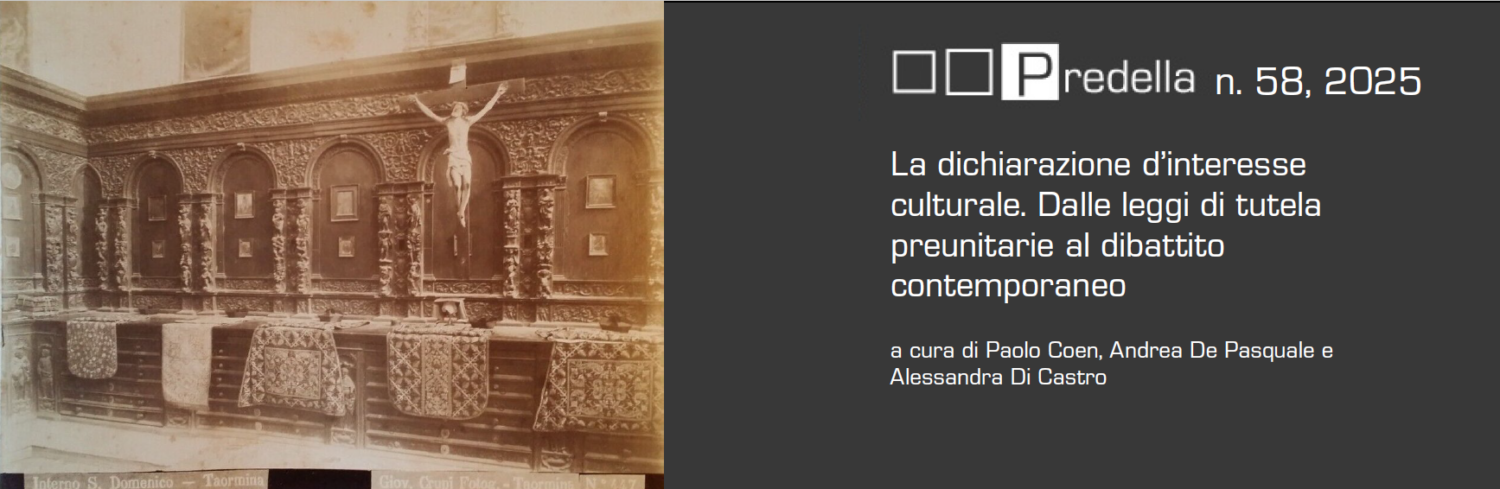
New York, Firenze, Taormina. Esportazioni transatlantiche tra Stefano Bardini e Stanford White nell’Italia post-unitaria
Flaminia Ferlito
This article explores the complex dynamics of art exportation between Italy and New York at the end of the 19th century, focusing on the case of “The Taormina Affair”. The analysis centers on Stanford White, a leading architect of the American Gilded Age, who, beyond his architectural achievements, played a crucial role in shaping the aesthetic taste of New York’s elite by acquiring European artworks. Through extensive archival research, the study reconstructs White’s acquisition networks and the intricate negotiations involved in exporting Italian decorative elements. A case study is the failed exportation of the choir and sacristy furnishings of San Domenico in Taormina, revealing the legal, bureaucratic, and political obstacles in the transatlantic art trade. The correspondence between dealers like Stefano Bardini, Giovanni Varelli and Italian authorities highlights the growing efforts to safeguard national heritage, marking a pivotal moment in the regulation of Italian art exports in the post-unification timeframe.